Why deploying new tech is not always the answer: lessons from EBDVF 2026
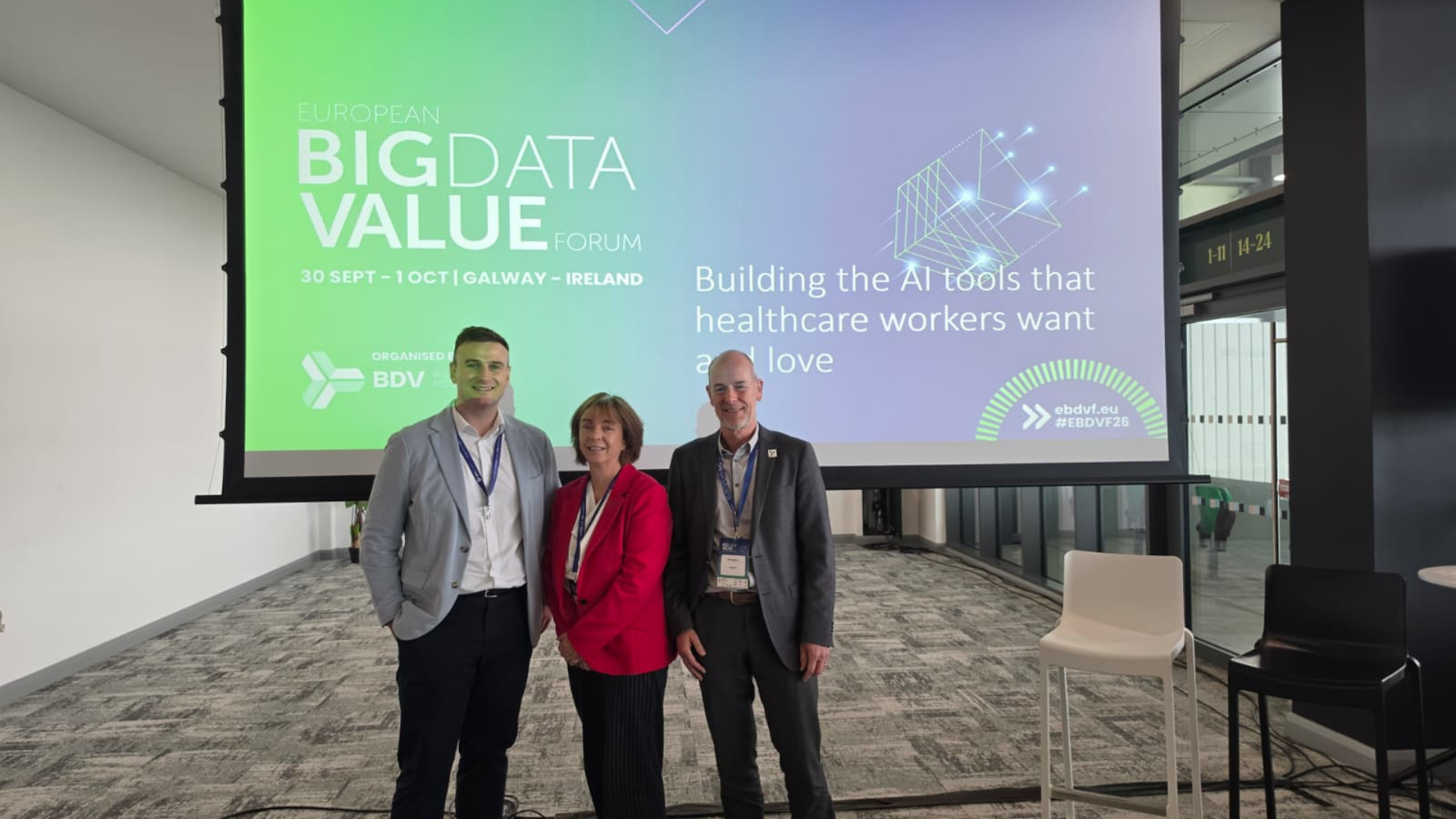
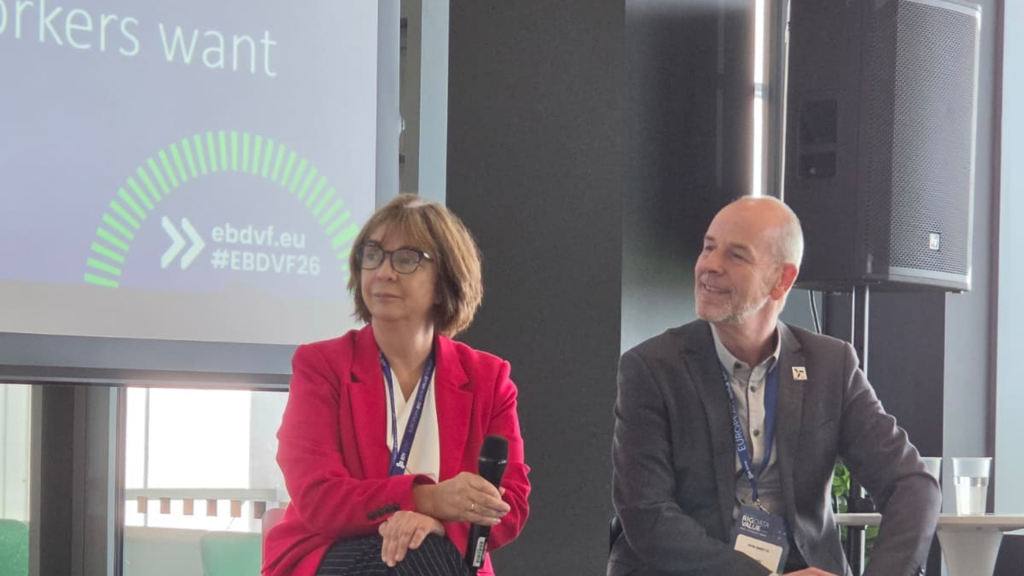
Last month, we hosted a panel at the European Big Data Value Forum 2026 (EBDVF), held at Dexcom Stadium in Galway, on building AI tools that fit how healthcare staff work. Brendan Rowan, Managing Consultant at BluSpecs, presented our research alongside Natalie Cole, Head of Innovation at Tallaght University Hospital, and Rob Smeets, Director Public-Private Partnerships at Philips.
We focus on healthcare because hospitals bring together many roles and ever-changing digital tools. A tool can work perfectly at the planning stage and still not fit how a ward runs. Our research at TechConnect looks at the gap between how technology is designed to be used and how it is actually used.
Key ideas shared:
- Deployment is the key phase: budget for it, plan for it and work for it.
- Friction is a signal: the ways staff adapt to a new tool show where the gap sits.
- Working with healthcare can be difficult because there is no room for mistakes
- Co-creation is when tools are built with the people who use them
What happens when a new tool arrives
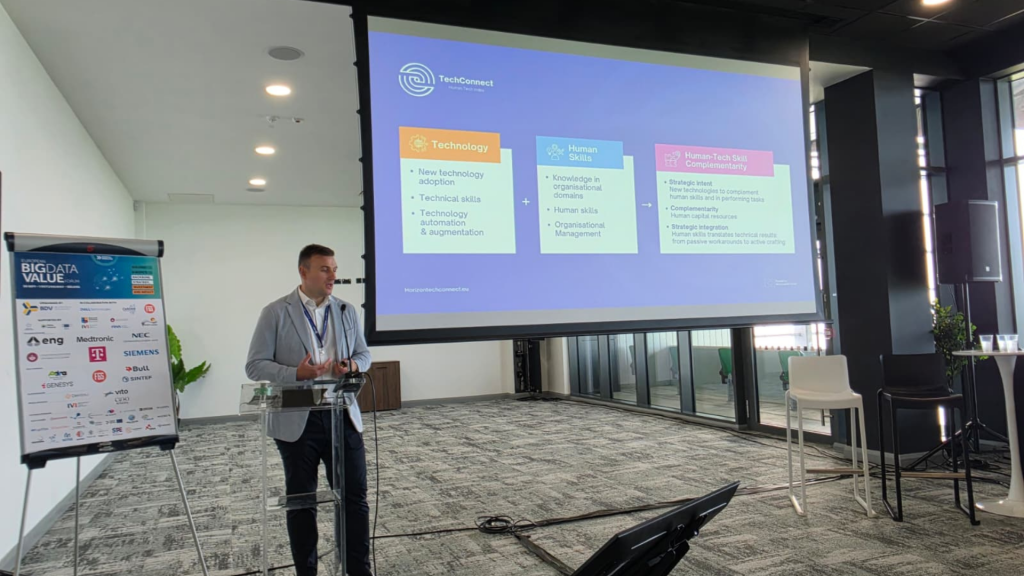
Brendan shared findings from 12 case studies in hospitals across Ireland, the Netherlands, Spain, and Sweden, based on 600+ interviews and 140 hours of fieldwork. He shared that when gaps appear, everyone sees a different problem. Staff report extra steps, IT finds that the system was installed correctly, and the vendor has delivered what was specified. Eventually managers investigate whether training or procurement failed.
These gaps add work, shift accountability, and clash with an organisation’s stated goals. Staff often try to bridge this by building workarounds. This is where the Human-Tech Skill Complementarity Index is helpful. The tool works in two stages. The Quick Scan shows where gaps sit across five levels, from task to organisation. The Deep Dive shows what each gap consists of, so teams can plan a targeted fix instead of defaulting to more training or a new tool.
Closing the gap in practice
Natalie described the healthcare technology graveyard: tools abandoned because of training demands, workarounds, workflow friction, cost and risks to patient safety. At Tallaght University Hospital, her team now tests digital and data solutions in a co-designed sandbox, so each one is safe, evaluated for benefit and meets a real need.
Rob explained how Philips co-creates solutions with hospitals, mapping the whole experience and giving every stakeholder a voice before anything is implemented. The right tool is not the newest one. It is the one built with the people who use it.
We also had a booth during the event, where we showcased our results and presented the Index to the wider AI and data community. It was a productive event, and we met several people interested in using the Index in their own organisations.